Unauthorized by Default: The True Organizational Cost of Shadow IT in the Modern Workplace

Photo: U.S. Fish and Wildlife Service, Public domain, via Wikimedia Commons
There is a particular irony embedded in how shadow IT typically begins. An employee, frustrated by a clunky internal tool or blocked by a slow procurement process, downloads a productivity app or signs up for a free SaaS platform. Their intentions are entirely reasonable — they want to get the job done faster. Within weeks, a handful of colleagues are using the same tool. Within months, it has quietly become load-bearing infrastructure for an entire department. By the time leadership becomes aware of it, the unauthorized solution has woven itself into daily operations in ways that are neither visible nor manageable.
This pattern plays out across American businesses of every size, and the consequences are rarely contained to the technology team. Shadow IT — defined broadly as any hardware, software, or service used within an organization without explicit IT approval — represents one of the most underestimated cost centers in modern enterprise operations.
The Gap Between Perception and Reality
Most executives, when asked to estimate the volume of unsanctioned tools in use across their organization, significantly undercount. Research from enterprise technology analysts has consistently found that the actual number of cloud applications running inside a typical mid-size business is several times higher than IT departments believe. This gap is not a reflection of negligence; it is a structural consequence of how modern SaaS tools are designed. Many require nothing more than a work email address and a credit card to activate, making them invisible to traditional procurement channels.
The financial exposure this creates is rarely immediate or dramatic. It accumulates gradually — in the form of redundant subscriptions, duplicated data stores, and the slow erosion of security perimeters that were never designed to accommodate a sprawling, unmonitored application ecosystem.
Compliance Risk: The Liability That Hides in Plain Sight
For businesses operating in regulated industries — healthcare, financial services, legal, or any sector handling personally identifiable information — shadow IT is not merely an operational inconvenience. It is a compliance liability with real legal and financial consequences.
Consider a scenario familiar to many compliance officers: a sales team begins using an unsanctioned CRM tool to track client interactions because the approved platform is considered too rigid. Over time, this tool accumulates sensitive customer data, including contact details, transaction histories, and communication records. When the organization undergoes a routine compliance audit, the data residing in this external platform was never included in the company's data governance framework. It was never assessed against HIPAA, CCPA, or SOC 2 requirements. It was never part of a vendor risk review.
The exposure at that point is not hypothetical. It is documented, discoverable, and potentially actionable.
Data Fragmentation and the Operational Cost It Carries
Beyond regulatory risk, shadow IT creates a fragmentation problem that undermines the very efficiency employees were seeking when they adopted the unauthorized tool in the first place.
When customer data lives in three different CRMs, when project timelines are tracked across five different platforms, and when file storage is split between approved enterprise systems and personal cloud drives, the organization develops a structural inability to generate reliable insight from its own information. Business intelligence becomes an exercise in reconciling incomplete datasets. Reporting requires manual aggregation. Decision-making slows.
This fragmentation also creates serious continuity risks. When an employee who managed a critical shadow IT tool leaves the organization, their subscriptions, credentials, and stored data often leave with them — or become orphaned entirely. Recovering that data, or even determining what was lost, can consume significant time and technical resources.
Security Vulnerabilities: Where Good Intentions Meet Real Consequences
From a cybersecurity standpoint, every unsanctioned application represents an unvetted entry point into the corporate network. IT teams build security architectures around known systems. They cannot patch, monitor, or respond to incidents involving tools they do not know exist.
Free-tier SaaS products — frequently the category of choice for employees who want to avoid the procurement process — often come with limited security configurations, shared infrastructure, and data retention policies that conflict with enterprise requirements. Employees connecting these tools via OAuth integrations with their corporate email or cloud storage accounts can inadvertently grant third-party applications broad access to sensitive organizational data.
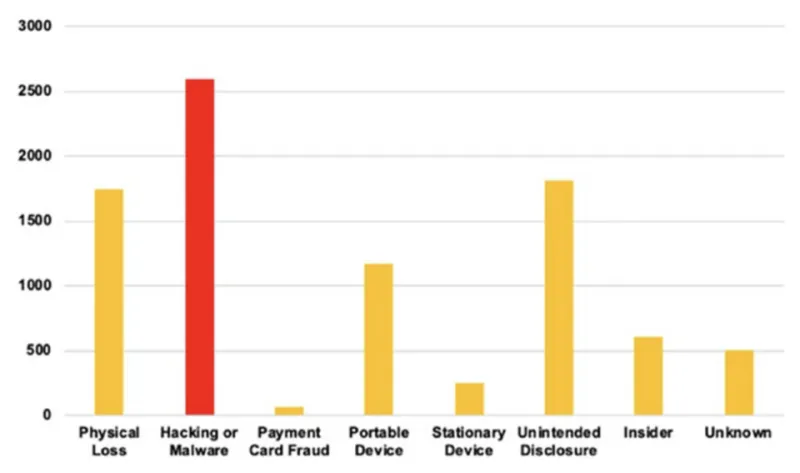
A single compromised account on an unauthorized platform can serve as the initial access vector for a broader breach. The 2023 wave of credential-based attacks targeting US businesses demonstrated repeatedly that attackers are not looking for the most sophisticated entry point — they are looking for the least monitored one.
Building a Framework That Addresses Root Causes
Addressing shadow IT effectively requires acknowledging that punitive approaches rarely work. Employees who circumvent official tools are generally not acting out of malice — they are responding rationally to friction in the approved technology environment. Any strategic response must account for that underlying dynamic.
Conduct a genuine technology audit. Before drafting new policies, organizations need an accurate picture of what tools are actually in use. This means deploying network monitoring solutions capable of identifying unsanctioned cloud application traffic, not simply asking department heads to self-report.
Create a fast-track evaluation process. One of the primary drivers of shadow IT adoption is the perception that official procurement channels are too slow to keep pace with business needs. Establishing a lightweight review process — one that can assess and approve low-risk tools within days rather than months — removes a significant incentive for employees to go rogue.
Engage employees as stakeholders, not suspects. The most durable shadow IT programs are built on transparency. When employees understand why certain tools are restricted, and when they have a legitimate channel through which to advocate for alternatives, they are far more likely to work within official systems.
Align approved tools with actual workflows. If a sanctioned tool is consistently being bypassed, that is a signal worth investigating. In many cases, the approved solution is either under-configured, poorly adopted, or genuinely inadequate for the task. Investing in better onboarding and configuration of official platforms often reduces shadow IT adoption more effectively than any policy document.
Integrate ongoing monitoring into the security posture. Shadow IT is not a problem that gets solved once. As the SaaS landscape continues to expand and employee expectations around tooling continue to evolve, organizations need continuous visibility into application usage — not annual point-in-time assessments.
The Strategic Imperative
The businesses that manage shadow IT most effectively are not those with the strictest policies. They are those that have built technology environments responsive enough to meet employee needs without sacrificing governance. That balance is difficult to achieve, but the alternative — allowing unauthorized tool adoption to compound unchecked — carries costs that extend well beyond any individual application subscription.
Data breaches, compliance penalties, operational fragmentation, and the erosion of institutional knowledge are not abstract risks. For many US organizations, they are the predictable downstream consequences of a shadow IT problem that was visible for years before it became critical.
The invisible tax of unauthorized technology is already being collected. The question is whether your organization will choose to see it before the bill arrives.