The True Price of Unprotected Systems: How American Businesses Are Paying for Cybersecurity Neglect
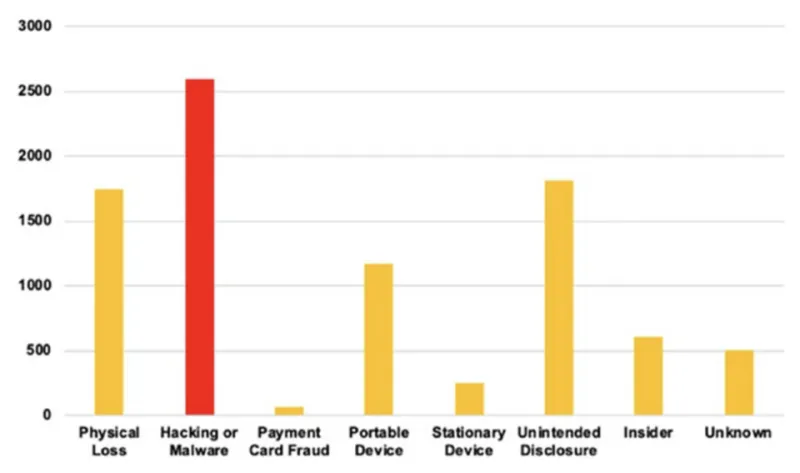
Photo: Neil Daswani and Moudy Elbayadi, Public domain, via Wikimedia Commons
There is a persistent myth in the American business community that cybersecurity is a concern reserved for enterprises with sprawling IT departments and government-level data obligations. For small and mid-sized companies racing to adopt new digital tools, security often occupies the final slide of an implementation deck — acknowledged, but rarely prioritized. What follows that oversight, however, is rarely minor.
The evidence is accumulating at an alarming rate. According to IBM's 2023 Cost of a Data Breach Report, the average breach in the United States now costs organizations $9.48 million — nearly double the global average. That figure does not account for the quieter losses: eroded vendor relationships, staff attrition, and the months of operational disruption that follow a serious incident.
When Efficiency Investments Become Liabilities
Consider the trajectory of a regional healthcare logistics firm based in the Midwest. After investing heavily in a cloud-based operations platform to streamline delivery coordination, the company's IT team deprioritized a scheduled security audit to meet a product launch deadline. Within eight months, attackers exploited an unpatched vulnerability in a third-party integration. Patient routing data was compromised. The firm faced regulatory scrutiny under HIPAA, incurred over $2.1 million in remediation costs, and lost two of its largest hospital contracts.
This pattern — accelerated technology adoption paired with deferred security investment — is not unique to healthcare. A mid-sized e-commerce retailer in Texas similarly found itself exposed after integrating six new point-of-sale and inventory management tools without conducting a unified security review. The breach lasted 47 days before detection. Customer payment data was exfiltrated, and the subsequent class-action settlement, combined with PCI DSS non-compliance fines, exceeded the company's entire annual technology budget.
These are not cautionary tales invented for effect. They reflect a structural problem in how American businesses conceptualize their technology stacks: as collections of capabilities rather than interconnected systems requiring holistic oversight.
The Compounding Effect of Reputational Damage
Financial losses, while severe, often prove easier to quantify than the reputational damage that accompanies a public breach. A 2022 survey by Ping Identity found that 63 percent of American consumers would stop doing business with a company following a data breach, regardless of how that company responded afterward. For businesses operating in competitive markets — financial services, retail, professional services — that erosion of consumer confidence can permanently alter market position.
One instructive example involves a legal technology startup based in Chicago. After a ransomware attack encrypted the firm's document management system and held case files hostage, the company chose to pay the ransom quietly and resume operations without public disclosure. When the breach eventually surfaced through independent reporting, the reputational damage was compounded by perceived dishonesty. The firm lost 40 percent of its client base within a single quarter and ultimately ceased operations within eighteen months of the incident.
Transparency, it turns out, is not merely an ethical obligation — it is a survival strategy. But the more productive conversation centers on prevention.
Anatomy of a Security Gap: What Gets Overlooked
Most breaches do not originate from sophisticated, novel attack vectors. The Verizon 2023 Data Breach Investigations Report found that 74 percent of breaches involved a human element — phishing, credential theft, or misconfiguration. Organizations that invest in headline-generating security tools while neglecting employee training, access management, and configuration hygiene are constructing fortresses with unlocked side doors.
Several categories of vulnerability appear consistently across incident post-mortems:
- Unmanaged third-party integrations: SaaS ecosystems frequently introduce vendor connections that fall outside standard security review cycles.
- Excessive access privileges: Employees and contractors routinely retain system access long after role changes or departures.
- Delayed patch management: Known vulnerabilities persist for months in environments where update schedules are deprioritized.
- Absent multi-factor authentication: Despite widespread availability, MFA adoption remains inconsistent across business applications.
- Undocumented shadow IT: Departmental tool adoption outside IT oversight creates blind spots in the security perimeter.
A Practical Security Audit Checklist for Modern Technology Stacks
For organizations looking to assess their current exposure, the following framework provides a structured starting point. This is not an exhaustive enterprise security program — it is a baseline that every business deploying modern technology tools should be able to confirm.
Identity and Access Management
- Conduct a quarterly review of user permissions across all platforms
- Enforce multi-factor authentication on every externally accessible system
- Implement a formal offboarding process that revokes access within 24 hours of departure
Third-Party and Integration Risk
- Maintain a live inventory of all active vendor integrations and API connections
- Review vendor security certifications (SOC 2, ISO 27001) before integration approval
- Establish contractual data handling requirements with all technology partners
Endpoint and Network Security
- Deploy endpoint detection and response (EDR) tools across all company devices
- Segment network access to limit lateral movement in the event of a compromise
- Audit remote access configurations, particularly for hybrid and distributed teams
Incident Preparedness
- Document and test an incident response plan at minimum annually
- Maintain encrypted, air-gapped backups of critical business data
- Assign clear ownership for breach communication, both internally and externally
Employee Security Culture
- Conduct phishing simulation exercises on a regular schedule
- Require security awareness training as part of onboarding for all new hires
- Establish a clear, non-punitive process for reporting suspected incidents
Security as a Strategic Asset, Not a Line Item
The organizations navigating digital transformation most successfully are those that have reframed cybersecurity not as a compliance burden but as a foundational component of operational resilience. When security is integrated into the technology selection process — evaluated alongside functionality, scalability, and cost — it ceases to be a remediation exercise and becomes a competitive differentiator.
Vendors offering modern security solutions have responded to this shift. Zero-trust architecture frameworks, AI-assisted threat detection, and consolidated security platforms now make enterprise-grade protection accessible to organizations of virtually any size. The barrier is rarely technical — it is philosophical.
For businesses currently building or expanding their technology stacks, the question is no longer whether cybersecurity investment is affordable. The case studies accumulating across American industries make the alternative answer that question with uncomfortable clarity.
At Nuvi Products, we recognize that the most innovative technology implementations are those built on secure foundations. The tools that power modern business must be matched by the discipline to protect them. Anything less is not a technology strategy — it is a liability waiting to be realized.