Silent Failures: How Broken API Integrations Are Quietly Undermining Your Business Operations
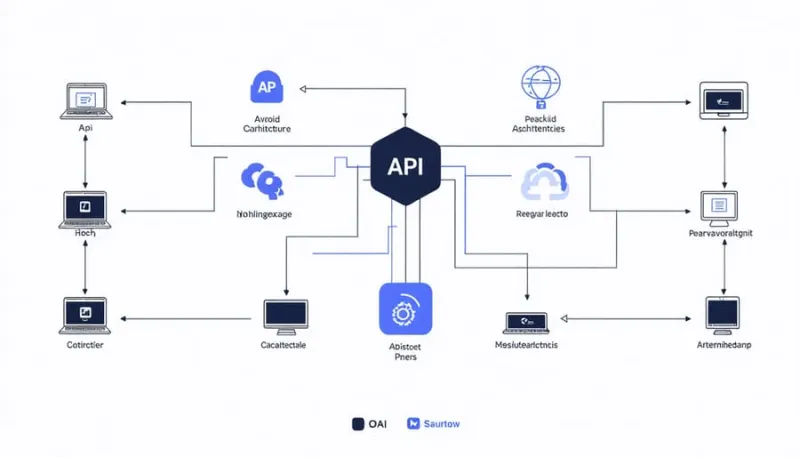
Photo: API integration technology network connections business dashboard, via alicebot.org
For most American businesses operating in a cloud-first environment, the technology stack is no longer a single platform — it is an ecosystem of interconnected tools, each communicating with the others through application programming interfaces, or APIs. CRM platforms talk to marketing automation systems. E-commerce engines push data to inventory management software. Payroll tools sync with accounting platforms. This web of integrations is what allows modern organizations to function with efficiency and scale.
Yet beneath the surface of that ecosystem, something troubling often goes unnoticed: integrations break. Not dramatically, not with error messages that trigger immediate alerts, but gradually and silently — until a sales report pulls incomplete data, a customer order fails to route correctly, or a financial reconciliation surfaces discrepancies that nobody can easily explain.
The API graveyard is a real phenomenon in enterprise technology. It is the accumulation of connections that were built, deployed, and then quietly forgotten — degrading in the background while the business operates under the assumption that everything is working as designed.
Why API Integrations Fail in the First Place
Understanding the root causes of integration failure is the first step toward preventing it. The most common culprit is vendor-side change. Third-party platforms update their APIs regularly — sometimes introducing breaking changes, sometimes deprecating endpoints that existing integrations rely upon. In an ideal world, vendors provide ample advance notice and clear migration documentation. In practice, the notice period is often insufficient, the documentation is incomplete, and the engineering teams responsible for maintaining integrations are already stretched thin.
Version deprecation is particularly insidious. An API endpoint that functioned reliably for three years may be scheduled for retirement, and the notification may arrive buried in a developer changelog that no one on the business side ever reads. When the deprecation date passes, the integration does not necessarily produce a hard error. Instead, it may return empty data sets, partially populated fields, or outdated records — creating a slow drift between what your systems believe to be true and what is actually happening in your business.
Beyond deprecation, there are subtler forms of degradation. Vendors occasionally alter the data schema of their API responses without formally versioning the change. A field that previously returned a string value may now return a numeric identifier. A nested object may be restructured. These shifts are rarely documented in ways that surface automatically, and the integration continues to run — it simply begins processing data incorrectly.
Authentication changes present another frequent failure point. OAuth token expiration policies, API key rotation requirements, and changes to permission scopes can all interrupt integrations that were previously stable. If your organization lacks a centralized credential management process, these expirations may go undetected until a downstream process fails.
The Business Cost of Invisible Degradation
The financial consequences of broken integrations are difficult to quantify precisely, which is part of what makes them so dangerous. When a server goes down, the impact is immediate and visible. When an API integration silently begins returning stale data, the damage accumulates over time — corrupting reporting, distorting forecasts, and eroding the trust that teams place in their own systems.
Consider a scenario common to mid-sized US retailers: a product catalog integration between an e-commerce platform and a warehouse management system quietly stops syncing inventory updates after a vendor API change. Orders continue to process. The customer experience appears normal. But overselling begins to occur, fulfillment errors accumulate, and customer service volume climbs — all before anyone identifies the root cause as a broken integration rather than a demand forecasting problem.
In organizations where teams operate in silos, the attribution problem compounds the issue. The marketing team blames the data team. The data team questions the CRM. The CRM vendor points to the integration layer. Weeks pass before the actual failure point is identified, and by then the operational damage has already been done.
Building an Integration Governance Framework
The organizations that manage API integrations most effectively treat them not as one-time technical implementations but as ongoing operational assets that require monitoring, documentation, and governance.
The foundation of that governance is a comprehensive integration inventory. Every API connection in your ecosystem should be catalogued: the systems involved, the data being exchanged, the version of the API in use, the authentication method, and the team or individual responsible for its maintenance. This inventory should be a living document, updated whenever integrations are added, modified, or retired.
Monitoring is equally essential. Passive assumptions that integrations are functioning correctly are a liability. Active monitoring — tracking response codes, data volume thresholds, field-level validation, and latency benchmarks — provides early warning when something begins to drift. Modern integration platforms and API management tools offer alerting capabilities that can flag anomalies before they become operational crises. Investing in that visibility is not optional for businesses that depend on connected systems.
Vendor communication practices also deserve deliberate attention. Organizations should designate someone — whether a technical lead, an IT operations manager, or a dedicated integration owner — to monitor vendor developer communications, changelog publications, and deprecation announcements. Setting up alerts for vendor developer blogs, subscribing to API status pages, and maintaining relationships with vendor technical support teams are all practices that reduce the risk of being blindsided by a breaking change.
Documentation Standards That Actually Hold Up
One of the most overlooked dimensions of integration management is documentation quality. Most integrations are built with sufficient technical notes to get them deployed, and then documentation stops. When something breaks six months later — or when the original developer has moved on — the organization is left reconstructing context from memory and scattered notes.
Effective integration documentation goes beyond connection parameters. It should capture the business logic embedded in the integration: why certain fields are mapped the way they are, what transformations are applied to the data, what downstream processes depend on the output, and what the acceptable tolerance is for data latency. This contextual documentation is what allows a different engineer — or an outside consultant — to diagnose and repair a failure without starting from scratch.
Version control practices should extend to integration configurations, not just application code. When an integration is updated to accommodate a vendor API change, the previous configuration should be preserved and the change logged with context. This creates a recoverable history that proves invaluable when troubleshooting.
Treating Integration Health as a Business Metric
Perhaps the most important shift organizations can make is cultural rather than technical. Integration health needs to be elevated from a background IT concern to a visible business metric. Leadership teams that review uptime dashboards and system performance reports should be asking the same questions about their integration layer: What percentage of our integrations are actively monitored? When did each integration last undergo a health review? How quickly can we detect and remediate a failure?
For US businesses that have invested significantly in building out connected technology ecosystems, the integrations between those systems are as strategically important as the systems themselves. A best-in-class CRM connected to a broken data pipeline is not delivering its full value. A sophisticated analytics platform fed by degraded integrations is producing insights built on faulty foundations.
The API graveyard grows not from negligence but from the absence of a systematic approach to integration lifecycle management. The businesses that will avoid it are those that recognize connected systems require continuous stewardship — and build the processes and accountability structures to deliver it.