The Best-of-Breed Trap: When Optimizing Every Tool Quietly Breaks the Whole System

Photo: disconnected technology puzzle pieces business integration, via thumbs.dreamstime.com
There is a particular kind of confidence that comes with building a technology stack piece by piece, selecting only what reviewers and analysts have deemed the finest option in each category. Marketing gets the most acclaimed automation platform. Sales earns the highest-rated CRM. Finance locks in the most sophisticated reporting suite. On paper, the organization appears to have assembled a championship roster.
In practice, it has often assembled a collection of strangers who share an office but never actually communicate.
This is the best-of-breed trap—a procurement philosophy that optimizes at the component level while quietly degrading performance at the system level. For many American businesses, particularly those that scaled rapidly through the pandemic-era digital acceleration, the consequences of this approach are only now becoming visible in the form of ballooning IT overhead, manual data reconciliation, and a workforce that spends more time managing tools than using them.
How the Logic Breaks Down
The appeal of best-of-breed selection is intuitive. Department heads know their workflows better than any centralized IT committee. Giving them the freedom to choose purpose-built tools that solve their specific problems feels like empowerment. And in isolation, it often is.
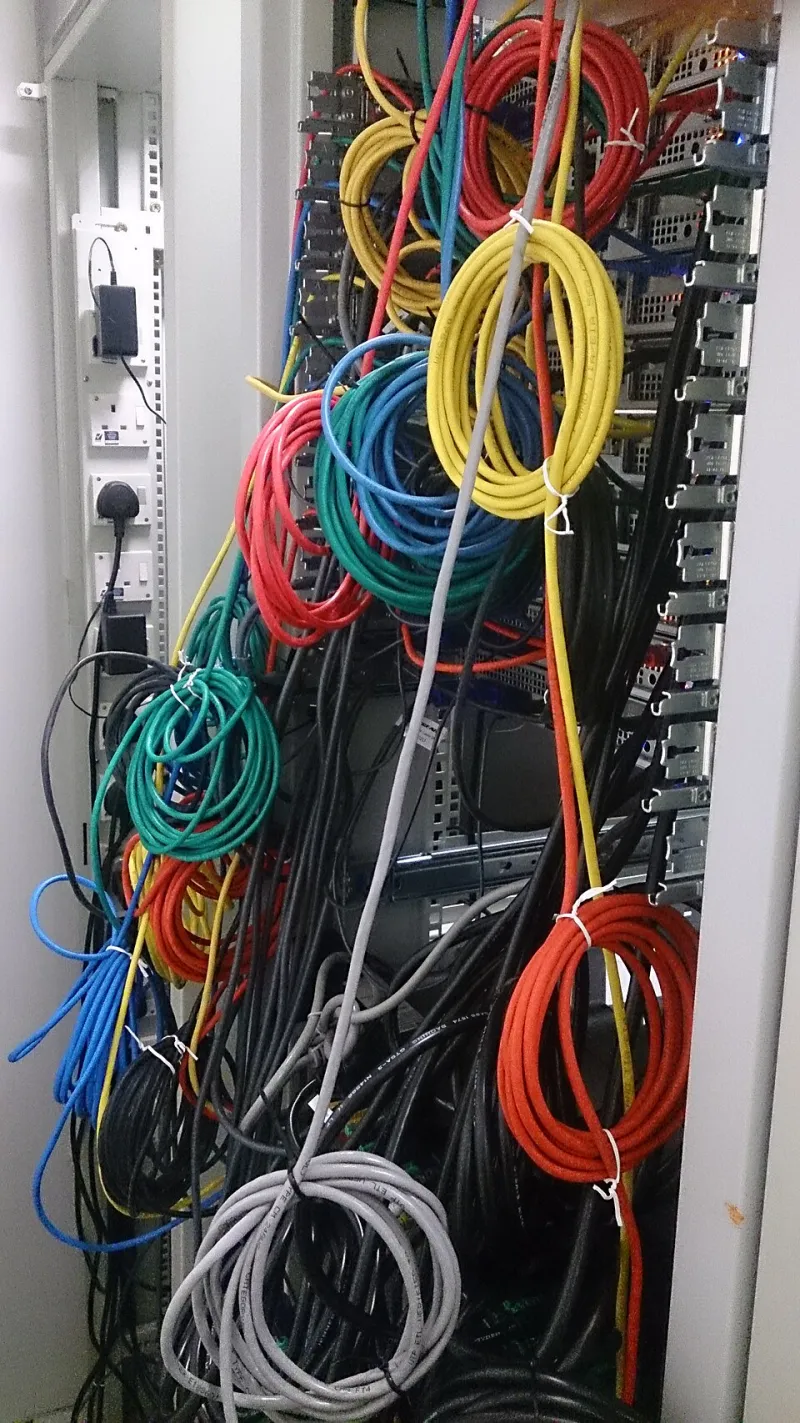
The breakdown occurs at the seams. When a marketing platform cannot natively pass lead-quality data to a sales CRM, someone builds a workaround—usually a manual export, a middleware connector, or a custom API integration maintained by a developer who has since left the company. When that CRM cannot push closed-revenue data into the finance reporting suite without a spreadsheet intermediary, the organization has quietly introduced a new category of operational risk: integration debt.
Each individual tool may perform exactly as advertised. The problem is that no vendor sold a solution for the space between tools. That space, multiplied across a dozen departments and dozens of point solutions, becomes some of the most expensive real estate in the organization.
The Invisible Workforce Propping Up the Stack
One of the most underappreciated costs of a fragmented best-of-breed environment is the human labor it quietly absorbs. Across many mid-size enterprises, a meaningful portion of employee time is spent on tasks that exist solely because systems do not integrate: re-entering data, reconciling conflicting reports, translating outputs from one platform into inputs for another.
This is not a failure of individual employees. It is a structural tax imposed by an architecture that was never designed to function as a whole. The people performing this work are often skilled professionals—analysts, coordinators, operations managers—whose capacity for higher-value thinking is consumed by digital plumbing.
When businesses calculate the total cost of ownership for their technology stack, this labor component is rarely included in the initial vendor evaluation. It emerges later, embedded in headcount, overtime, and the quiet frustration of teams that feel perpetually behind despite working with tools that were supposed to make them faster.
Why Integration Burden Rarely Appears in the Sales Pitch
Vendors selling best-in-class point solutions have little financial incentive to advertise their integration limitations. Demos are carefully choreographed to showcase core functionality. Compatibility questions are answered with optimistic references to open APIs and available connectors—language that sounds reassuring but often translates to significant implementation effort once a contract is signed.
The result is a pattern that technology procurement teams across the United States encounter with predictable regularity: a tool that performs brilliantly in its own environment but requires weeks of engineering work and ongoing maintenance to function within an existing stack. By the time that cost becomes apparent, the purchase has already been approved and the migration is underway.
This is not to suggest that vendor relationships are adversarial. Most solution providers genuinely believe their product delivers value. But the evaluation burden falls on the buyer, and many organizations are not yet asking the right questions at the right stage of procurement.
A Framework for Evaluating Integration Burden
Before committing to any point solution, regardless of its individual merit, organizations benefit from applying a structured integration assessment alongside the standard feature evaluation. The following framework offers a starting point.
Map the data flows first. Before evaluating a tool's capabilities, document what data must enter it, what data must leave it, and where both originate and terminate. Any gap between the tool's native connectors and the organization's existing systems represents a future integration project.
Quantify the connector landscape. Does the vendor offer a native, maintained integration with your core platforms—ERP, CRM, HRIS, data warehouse? Or does compatibility depend on third-party middleware, custom API development, or manual processes? Each layer of indirection adds fragility and maintenance cost.
Assign an integration maintenance owner. Before approving a purchase, identify who within the organization will own the integration long-term. If the honest answer is unclear, that ambiguity is a cost that belongs in the total cost of ownership calculation.
Model the workaround cost. If native integration is unavailable, estimate the ongoing labor required to bridge the gap manually. Multiply that estimate across a realistic operational timeline—three to five years—and compare it against the cost of a less specialized but more compatible alternative.
Evaluate the vendor's integration roadmap. A vendor that cannot articulate a clear, time-bound roadmap for expanding native integrations is implicitly asking the customer to absorb integration risk indefinitely.
When Unified Platforms Deserve a Second Look
The best-of-breed philosophy emerged, in part, as a reaction to the limitations of monolithic enterprise platforms—systems that promised to do everything and often did nothing particularly well. That critique still holds in certain contexts. But the technology landscape has shifted considerably.
Modern unified platforms have narrowed the capability gap significantly. Many now offer functionality that, while not always the absolute pinnacle in any single category, is sufficiently capable to meet the operational needs of most departments—while eliminating the integration overhead that best-of-breed stacks impose. For organizations where cross-functional data flow is a strategic priority, the marginal feature advantage of a point solution may be a poor trade for the systemic friction it introduces.
The question is not whether the best-of-breed tool is better in isolation. It almost always is. The question is whether that advantage survives contact with the rest of the organization.
Rethinking What Optimization Actually Means
True optimization is not about maximizing the performance of each component. It is about maximizing the performance of the system. A collection of individually excellent tools that cannot coordinate effectively is not an optimized stack—it is an expensive collection of silos.
Businesses that recognize this distinction early are better positioned to make procurement decisions that account for organizational reality rather than demo-room performance. They ask harder questions before signing contracts. They factor integration burden into vendor evaluations as a first-class concern rather than an implementation afterthought.
And increasingly, they are discovering that the most innovative technology decision a company can make is not always the one that selects the most sophisticated tool—but the one that selects the tool that makes everything else work better.