Buried Connectors, Broken Operations: The Integration Debt No One Is Auditing
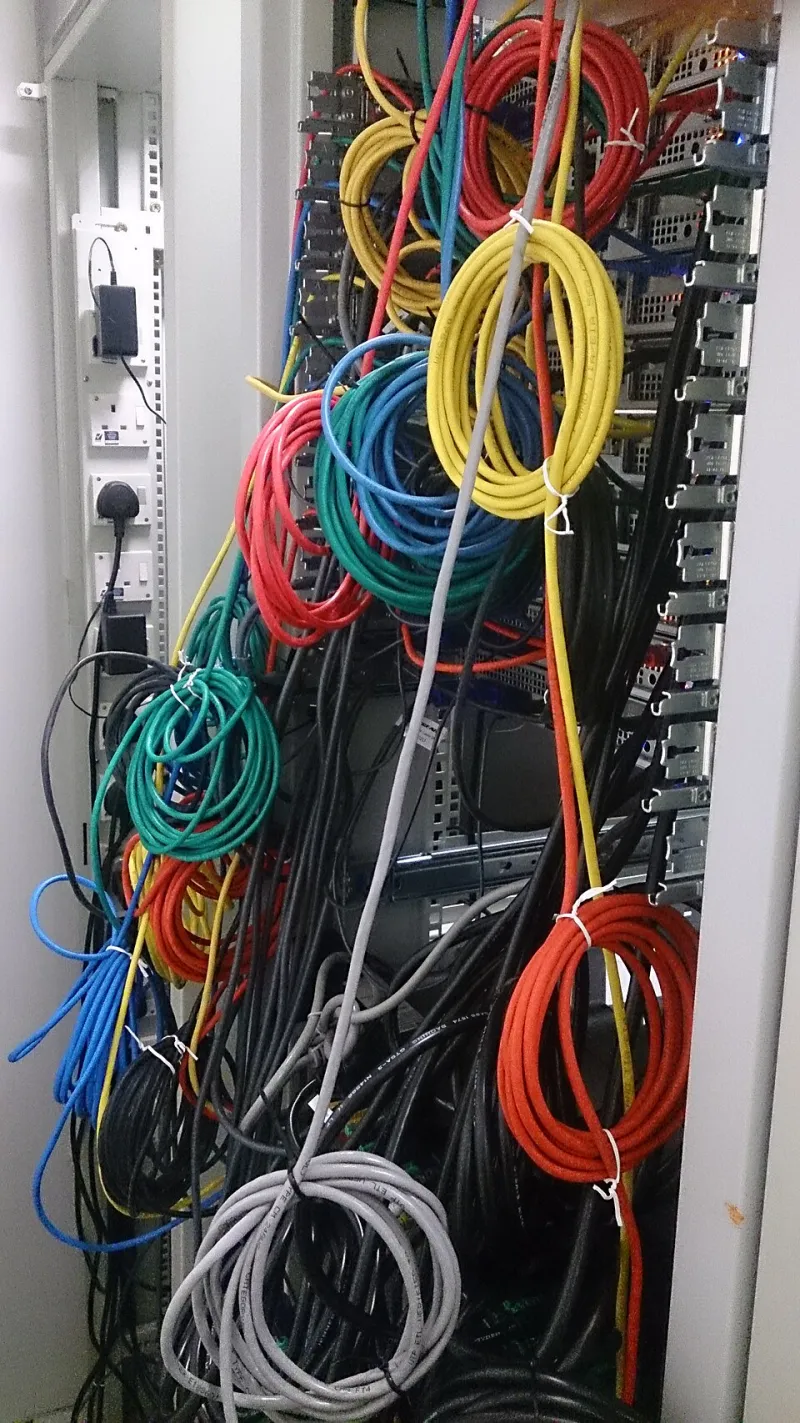
Photo: ProjectManhattan, CC BY-SA 3.0, via Wikimedia Commons
Every technology decision a business makes leaves a footprint. Some footprints are easy to track — a new SaaS subscription, a hardware upgrade, a platform migration. Others are far less visible. Somewhere between your CRM, your ERP, your data warehouse, and the dozen other platforms your teams rely on daily, there exists a layer of connectors, bridges, and translation logic that most organizations have never formally inventoried. That layer is your middleware ecosystem. And for a growing number of American businesses, it has quietly become one of the most expensive liabilities on the balance sheet.
The Accumulation Problem Nobody Planned For
Middleware doesn't appear all at once. It accumulates over years of incremental decision-making — a connector built to sync two platforms during a product launch, a custom webhook added to patch a data gap, a third-party integration tool licensed to solve a one-quarter problem that somehow never got retired. Each addition made sense at the time. Collectively, they form what engineers sometimes call an integration graveyard: a dense collection of active, semi-active, and entirely dormant connection layers that all consume resources, generate logs, and introduce failure points regardless of whether anyone is actually using them.
The challenge is compounded by organizational turnover. The developer who built a particular middleware bridge in 2019 may no longer be with the company. The business requirement that justified a specific data pipeline may have changed entirely. Yet the connector persists, quietly running in the background, occasionally misfiring, and reliably consuming maintenance bandwidth that could be directed elsewhere.
What Ghost Integrations Actually Cost
The term "ghost integration" refers to any middleware component that remains technically active but serves no current business function — or whose function is so poorly documented that no one can confirm whether it remains necessary. Ghost integrations are more common than most IT leaders realize, and their costs are rarely captured in a single line item.
First, there is the direct infrastructure cost. Middleware components consume compute resources, API call quotas, and in many cases, licensing fees tied to the third-party tools that power them. Businesses paying for integration platform subscriptions are often funding connections that haven't moved meaningful data in months.
Second, there is the diagnostic cost. When a data pipeline fails or a sync error surfaces, the troubleshooting process in a cluttered integration environment is exponentially more complex. Engineers must trace data flows through layers of logic that may be poorly documented, partially deprecated, or dependent on credentials that have long since rotated. Every hour spent diagnosing a failure that originated in a forgotten connector is an hour not spent on productive development work.
Third — and perhaps most consequential for business leadership — there is the strategic cost. Organizations that can't trust their data flows make slower, less confident decisions. When integration reliability is uncertain, teams build manual workarounds, maintain redundant spreadsheets, and default to gut instinct rather than data-driven analysis. The downstream effect on business strategy is significant and largely invisible on any standard financial report.
Why the Problem Persists
Most organizations understand, in the abstract, that technical debt is a real concern. Middleware debt, however, receives far less attention than more visible forms of technical accumulation. There are a few structural reasons for this.
Ownership is diffuse. Unlike a software license that appears on a procurement report, middleware components are often built and managed across multiple teams — IT, engineering, operations, and sometimes individual business units acting without centralized oversight. No single stakeholder has a complete picture of what exists, who owns it, or what it does.
Documentation is inconsistent. Integration logic is notoriously under-documented in most organizations. The rationale behind a specific connector, the data fields it maps, and the business process it supports may exist only in the memory of the person who built it — if that person is still reachable at all.
Retirement is deprioritized. Building new integrations is visible, measurable work. Retiring old ones is invisible maintenance that rarely earns recognition or resources. As a result, the default posture in most environments is to leave existing connectors in place unless they cause an active outage.
A Framework for Conducting a Middleware Audit
Addressing integration debt requires a structured approach, not a reactive cleanup after the next major failure. The following framework offers a practical starting point for organizations ready to take inventory of their integration layer.
Step one: Map before you act. Before any component is retired or modified, build a complete map of every active integration in your environment. This includes custom-built connectors, third-party integration platforms, native app connections, and any webhook or API-based data flow. Tools that provide integration observability can accelerate this process, but a manual audit using system logs and platform dashboards is a viable starting point for smaller environments.
Step two: Classify by function and frequency. For each identified integration, answer two questions: What business process does this support? And when did it last move meaningful data? Integrations that cannot answer the first question clearly, or that show no recent activity on the second, should be flagged for review.
Step three: Assign ownership. Every integration that remains in your environment should have a named owner — a person or team accountable for its continued operation, documentation, and eventual retirement. Ownerless integrations are the primary source of ghost connectors.
Step four: Establish a retirement protocol. Organizations should define a formal process for decommissioning integrations that no longer serve an active business function. This includes a notification period, a dependency check to confirm no downstream systems rely on the connector, and a documentation requirement to record what was removed and why.
Step five: Build ongoing governance. A one-time audit addresses the current backlog. Preventing future accumulation requires governance — specifically, a policy that any new integration request must include documentation of its purpose, its owner, and the conditions under which it should be retired.
Treating Integration as a Strategic Asset
The businesses that extract the most value from their technology investments are not necessarily the ones with the most integrations. They are the ones with the right integrations — reliable, well-documented, actively maintained connections that move accurate data between systems with consistency and transparency.
An integration layer built on that foundation becomes a genuine competitive asset. It enables faster reporting, cleaner analytics, and more confident strategic decision-making. An integration layer built on years of unreviewed accumulation becomes the opposite: a source of friction, a drain on engineering capacity, and a quiet brake on business velocity.
The middleware graveyard is not inevitable. It is the predictable result of building without auditing, and of treating integration as infrastructure rather than strategy. For organizations prepared to address it directly, the opportunity is substantial — not just in cost recovery, but in the operational clarity that comes from finally knowing exactly how your systems talk to one another.